Description
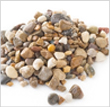
Our 6mm channel gravel is a natural flint containing particles ranging from 10mm to 20mm. Most commonly used for driveways, pathways. It is also most popular size shingle for making concrete when mixed with our cement and concreting sharp sand.
Also available: 20mm channel gravel, 10mm channel gravel, 40mm channel gravel
Features and Benefits of 6mm channel gravel
- Bedding of pipes with a minimum diameter of 140mm and surrounds
- Surface dressing
- Drainage trenches
- This is the most common grade of shingle used for driveways
- Land based can be dirty/silty
- Will not interlock due to it being sub-angular
- Also known as 20mm gravel, pipe bedding and drainage aggregate
- Dependent on source the material can be either marine dredged or quarried (known as land based)
- When crushed and graded it will have a sub-angular appearance but can be fully rounded when screen graded and not crushed
What is gravel
Colloquially, the term gravel is often used to describe a mixture of different size pieces of stone mixed with sand and possibly some clay.[1] The American construction industry distinguishes between gravel (a natural material) and crushed stone (produced artificially by mechanical crushing of rock.)[2][3][4]
The technical definition of gravel varies by region and by area of application. Many geologists define gravel simply as loose rounded rock particles over 2 mm (0.079 in) in diameter, without specifying an upper size limit.[5][6][7][8] Gravel is sometimes distinguished from rubble, which is loose rock particles in the same size range but angular in shape.[9] The Udden-Wentworth scale, widely used by geologists in the US, defines granular gravel as particles with a size from 2 to 4 mm (0.079 to 0.157 in) and pebble gravel as particles with a size from 4 to 64 mm (0.16 to 2.52 in). This corresponds to all particles with sizes between coarse sand and cobbles.[10]




Reviews
There are no reviews yet.